The Complete Retinol Hub: Protocols & Reviews
The Retinol Science & Clinical Guide Hub
Evidence-based protocols, recovery timelines, formulation breakdowns, and product reviews categorized by experience level and skin barrier needs.
Our Clinical Protocol Methodology
Every guide and product recommendation on SkincareInsiderr is evaluated for retinoid bio-availability, vehicle formulation (lipids, gels, or micro-encapsulated serums), and buffering agents (ceramides, niacinamide, and hyaluronic acid) to accelerate cellular turnover while keeping the moisture barrier 100% intact.
Retinol for Beginners (Start Here)

What is Retinol? The Complete Guide (2026)
A proven vitamin A derivative that converts into retinoic acid to accelerate cellular turnover and stimulate deep collagen production.
.webp)
Is Retinol Safe for Beginners? (Simple Method)
Safe when introduced gradually on completely dry skin, followed by a ceramide moisturizer to protect against barrier compromise.

Best Retinol Strength for Beginners
0.1% to 0.3% is the clinically optimal range to initiate cell renewal with minimal risk of flaking and redness.
.webp)
Retinol for Beginners: How to Start Safely
Apply a pea-sized drop only 2 nights per week for the first 3 weeks, increasing frequency only as your skin adapts.

Use Retinol Safely: The Beginner Method
The moisture sandwich technique creates a protective lipid buffer without blunting long-term anti-aging results.

Thinking About Starting Retinol? A to Z
Mid-to-late 20s is ideal for preventive anti-aging. Requires a daily broad-spectrum SPF 30+ to protect new skin cells.

Can Retinol Ruin Your Skin? Safe Start Guide
Retinol does not permanently damage skin unless overused or mixed with aggressive acids on a compromised moisture barrier.
Irritation, Peeling & Purging

Retinol Peeling: Why It Happens & How to Stop It
Pause all active exfoliants for 5 days. Layer panthenol and ceramides over damp skin; never manually scrub flaking skin.

How Long Does Retinol Purging Last?
True purging resolves within 4 to 6 weeks as micro-comedones clear. Breakouts past 8 weeks signal barrier degradation.

How Long Does Irritation Last? Recovery Timeline
Acute irritation resolves within 3 to 7 days of complete rest and barrier support before slowly resuming on a buffered schedule.

Retinol Irritation Day by Day: Skin Changes
Days 1–2 bring tightness, Days 3–4 show mild flaking, and Days 5–7 restore calm as cellular turnover stabilizes.

Retinol Purge vs Irritation: Complete Guide
Purging presents as small whiteheads in familiar acne zones. Irritation causes widespread stinging, redness, and flaking.
%20(1).webp)
Purging or Breakout? Is Retinol Working?
If surface bumps resolve faster than usual acne and your plain moisturizer doesn't sting, your retinol is working properly.
Editor's Recommended Starter Retinols
Top clinically-tested encapsulated formulas designed to boost cellular renewal without causing redness or barrier flaking.

CeraVe Resurfacing Retinol Serum
Encapsulated retinol formulated alongside 3 essential ceramides and niacinamide to restore the moisture barrier while refining texture.
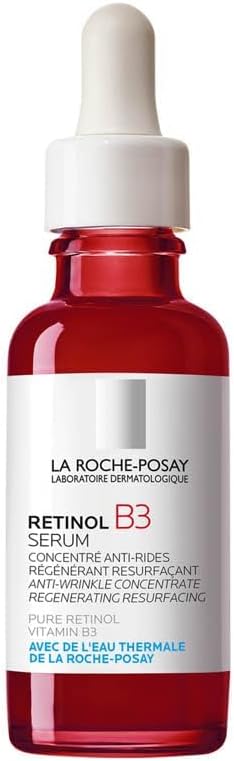
La Roche-Posay Retinol B3 Serum
Gradual-release pure retinol complex combined with 10% Vitamin B3 to visibly smooth wrinkles without irritating reactive skin.
Routine & Ingredient Layering

Retinol & Hyaluronic Acid: Routine Best Order
Apply Hyaluronic Acid to damp skin first, allow to dry completely (5–10 mins), then apply your retinol over top.

Retinol & Niacinamide: Routine & Safety Guide
The perfect pairing. Niacinamide strengthens the ceramide lipid barrier and dampens the inflammatory response of retinoids.

Can You Use Retinol With AHA/BHA? How to Combine Them Safely
Learn how to combine retinol with exfoliating acids without overwhelming your skin barrier, including safer scheduling and layering strategies.

Retinol Results Timeline: Week-by-Week
Weeks 1–4: acclimation; Weeks 6–8: skin texture refinement; Weeks 12+: noticeable fine line and collagen improvements.

Retinol Before and After Results: Week by Week
Realistic visual timeline of cellular turnover, fine line smoothing, and collagen remodeling from Week 1 to Month 6.
How to Use Retinol: Step-by-Step Protocol
Cleanse → Wait 10 mins → Pea-sized Retinol → Barrier Cream. Nighttime only, with broad-spectrum SPF every single morning.
Product Comparisons & Reviews

Is High-End Retinol Worth It? (What You Pay For)
Luxury formulas invest in slow-release micro-encapsulation and lipid vehicles, not higher active percentages.

Helena Rubinstein Replasty ($595 Worth It?)
Exceptional 30% Proxylane post-procedure bandage texture, ideal for mature and sensitive skin with unlimited budget.
LilyAna Naturals Retinol Cream Review (2026)
Gentle, botanical-rich beginner cream infused with Aloe and Jojoba. Excellent value with virtually zero flaking risk.
.webp)
Retinol vs Retinoid: What's the Real Difference?
Retinoid is the overarching family; OTC retinol requires conversion steps, making it milder than pure prescription forms.

Retinol vs Retin-A: Which Should You Use?
Retin-A (Tretinoin) works directly as retinoic acid for faster acne/wrinkle clearance but carries a higher irritation profile.
.webp)
Retinol vs Vitamin C: Benefits & How to Use
Never mix in the same layer. Apply Vitamin C in AM for antioxidant protection; apply Retinol in PM for cellular renewal.
Retinol by Skin Type
Best Retinol for Sensitive Skin (5 Gentle Serums)
Top formulas engineered with time-release encapsulation paired with soothing Centella Asiatica and Bisabolol.

Best Retinol for Dry Skin (4 Derm Serums)
Emollient oil-serums and cream vehicles featuring squalane to prevent transepidermal water loss.

Stop Damaging Dry Skin with Retinol
Protect delicate facial zones with an occlusive balm first, then buffer the active with a rich fatty-acid moisturizer.
.webp)
Retinol for Oily Acne-Prone Skin
Lightweight, non-comedogenic fluid formulations that regulate excess sebum synthesis and keep pores unclogged.

