Obagi Retinol 1.0 Review: Clinical Results, Benefits & Is It Worth It?
Affiliate Disclosure: This post may contain affiliate links. If you purchase through a link on this page, we may earn a commission at no extra cost to you.
Quick Answer
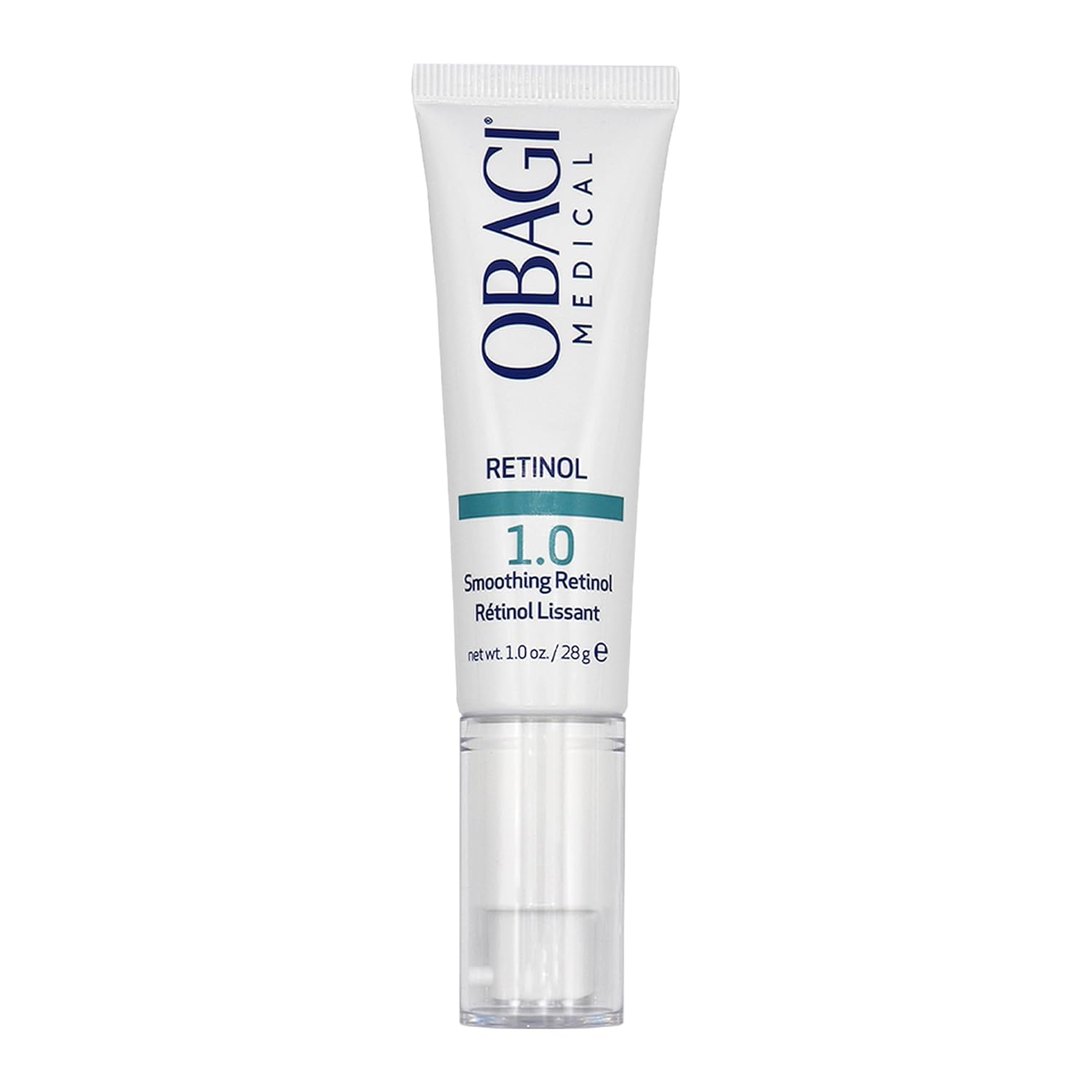
Obagi 1.0 Smoothing Retinol is a high-strength retinol treatment designed to promote skin turnover, improve skin texture, even skin tone, and reduce the appearance of fine lines and wrinkles.
What makes this formula particularly interesting is Obagi's slow-release, entrapped retinol technology. The company says the formula is designed to provide effective results with minimal irritation, although temporary redness, peeling, or irritation can still occur while the skin adjusts.
Obagi's clinical testing also reports strong improvements in the appearance of fine lines, skin tone, and skin texture, including 79% of participants agreeing that their fine lines and wrinkles appeared less visible, 82% reporting more even skin tone or increased brightness, and 88% reporting improved skin texture.
What Is Obagi Retinol 1.0?
Obagi 1.0 Smoothing Retinol is a nighttime retinol treatment formulated to promote skin turnover and improve visible signs of skin aging. Obagi describes it as a highly effective slow-release, entrapped retinol designed to help even skin tone and minimize the appearance of fine lines and wrinkles.
Unlike a basic retinol product that simply focuses on concentration, Obagi emphasizes its delivery technology. The retinol is entrapped and released gradually, with the goal of providing effective skin renewal while minimizing irritation.
The product is designed for evening use and comes in an airless pump. Obagi recommends applying one pump or a pearl-sized amount to the face once daily in the evening.
Obagi Retinol 1.0 Clinical Results
One of the strongest reasons to consider Obagi Retinol 1.0 is the clinical data presented by the brand. Obagi reports results from its clinical and consumer-perception testing showing improvements in several visible signs of skin aging.
| Result | Obagi Reported Result |
|---|---|
| Fine Lines & Wrinkles | 79% agreed that their fine lines and wrinkles appeared less visible. |
| Skin Tone & Brightness | 82% agreed their skin tone was more even or skin brightness had increased. |
| Skin Texture | 88% agreed their skin texture had improved. |
These figures come from Obagi's reported testing and reflect participant responses. They should not be interpreted as a guarantee of individual results.
How Obagi Retinol 1.0 Helps the Skin
Retinol is a vitamin A derivative commonly used in skincare to support skin renewal. Obagi specifically positions its 1.0 Smoothing Retinol around skin turnover, resurfacing, skin tone, texture, and visible signs of aging.
- Fine Lines & Wrinkles: Helps minimize the appearance of fine lines and wrinkles with consistent use.
- Skin Texture: Promotes skin turnover and helps improve the appearance of uneven skin texture.
- Uneven Skin Tone: Supports a more even-looking complexion and improved skin brightness.
- Skin Resurfacing: Helps resurface the skin and improve the overall appearance of the complexion.
- Signs of Skin Aging: Designed to minimize visible signs of aging and promote younger-looking skin.
What Makes Obagi Retinol 1.0 Different?
The main technology Obagi highlights is its entrapped, slow-release retinol.
According to Obagi, this delivery approach allows the retinol to be released gradually while promoting skin turnover. The company describes the formula as highly effective while also aiming to minimize irritation.
That distinction matters because retinol can cause temporary redness, peeling, dryness, or irritation when the skin is adjusting. A slow-release delivery system is intended to make the experience more manageable, but it does not eliminate the possibility of irritation.
Key Ingredient: Retinol
Retinol is a type of retinoid, which belongs to a class of Vitamin A compounds and derivatives widely used in skincare.
Obagi explains that retinol is a non-prescription retinoid that has been shown to reduce the appearance of fine lines and wrinkles, smooth skin texture, and improve overall skin tone.
In this product, the retinol is delivered using Obagi's entrapped slow-release technology.
Is Obagi Retinol 1.0 Good for Beginners?
Usually, it is better approached cautiously.
If you are completely new to retinol, starting with a lower-strength product can make the adjustment process easier. Obagi Retinol 1.0 is better suited to someone who is comfortable using retinoids and wants a more intensive option.
Regardless of experience level, start at a frequency your skin can tolerate. If redness, peeling, or irritation develops, reduce use to every other night or as tolerated until your skin adjusts.
How to Use Obagi Retinol 1.0
- Cleanse: Cleanse your face and prepare your skin for your nighttime routine.
- Dispense: Uncap the airless pump and apply approximately one pump or a pearl-sized amount.
- Apply: Massage the product evenly over your face until fully absorbed.
- Use in the evening: Obagi recommends using the product once daily in the evening.
- Use sunscreen the next morning: Apply a broad-spectrum sunscreen with SPF 30 or higher every morning.
If irritation occurs: Obagi recommends limiting use to every other night or using the product as tolerated. Once your skin has adjusted, you can return to daily use.
When Will You See Results From Obagi Retinol 1.0?
Retinol results develop gradually. Your experience will depend on your skin, consistency, starting tolerance, and the concerns you are treating.
- Early adjustment: Your skin may experience temporary redness, peeling, dryness, or irritation as it becomes accustomed to retinol.
- Several weeks: Consistent use may begin to improve the appearance of skin texture and overall complexion.
- Longer-term use: Continued use can help improve the appearance of fine lines, wrinkles, uneven tone, and skin texture.
Obagi's clinical testing provides additional evidence of visible improvements, with 79% reporting less visible fine lines and wrinkles, 82% reporting more even skin tone or increased brightness, and 88% reporting improved skin texture.
Obagi Retinol 1.0 Pros & Cons
Pros
- Slow-release, entrapped retinol technology.
- Designed to promote skin turnover.
- Targets fine lines and wrinkles.
- Helps improve the appearance of uneven skin texture.
- Helps improve the appearance of uneven skin tone.
- Supported by Obagi-reported clinical and consumer-perception results.
- Airless pump packaging.
Cons
- Can cause temporary redness, peeling, or irritation.
- May require an adjustment period.
- Not necessarily the best starting point for retinol beginners.
- More expensive than many basic drugstore retinol products.
Obagi Retinol 1.0 vs. Obagi Retinol 0.5
Both products are part of the OBAGI360® retinol range, but the 1.0 Smoothing Retinol is positioned as the stronger option.
| Feature | Obagi Retinol 1.0 | Obagi Retinol 0.5 |
|---|---|---|
| Product | 1.0 Smoothing Retinol | 0.5 Smoothing Retinol |
| Retinol Technology | Entrapped, slow-release retinol | Entrapped retinol with slow-release technology |
| Primary Focus | Skin turnover, wrinkles, texture and tone | Skin renewal, fine lines, wrinkles and texture |
| Best For | Users looking for a more intensive retinol treatment | Users wanting a lower-strength option within the range |
| Current Obagi Price | $90 | $80 |
Which should you choose? If you are new to retinol or still developing your tolerance, the 0.5 Smoothing Retinol may be the more appropriate starting point. If you already tolerate retinol well and want a stronger option, Retinol 1.0 is the more intensive choice.
Clinical results are based on Obagi-reported testing and participant responses. Individual results may vary. The percentages shown above should not be interpreted as a guarantee of results.
Frequently Asked Questions
- How effective is Obagi Retinol 1.0?
- Obagi reports that 79% of participants agreed their fine lines and wrinkles appeared less visible, 82% agreed their skin tone was more even or brightness had increased, and 88% agreed their skin texture had improved. Individual results vary.
- Does Obagi Retinol 1.0 help with uneven skin texture?
- Yes. Obagi specifically states that retinol can smooth skin texture, and its clinical results report that 88% of participants agreed their skin texture had improved.
- Does Obagi Retinol 1.0 help with fine lines and wrinkles?
- Yes. Obagi says the product helps reduce the appearance of fine lines and wrinkles. Its reported clinical results found that 79% of participants agreed their fine lines and wrinkles appeared less visible.
- Does Obagi Retinol 1.0 improve skin tone?
- Obagi says retinol can improve overall skin tone. In its reported results, 82% of participants agreed that their skin tone was more even or their skin brightness had increased.
- Does Obagi Retinol 1.0 cause peeling?
- It can. Obagi states that mild redness, peeling, or skin irritation may occur and can be temporary while the skin adjusts.
- How often should I use Obagi Retinol 1.0?
- Obagi recommends using one pump or a pearl-sized amount once daily in the evening. If irritation occurs, the company recommends reducing use to every other night or using it as tolerated until the skin adjusts.
- Can I use Obagi Retinol 1.0 around my eyes?
- Avoid getting the product into your eyes. If contact occurs, Obagi recommends rinsing thoroughly with water.
- Should I wear sunscreen while using Obagi Retinol 1.0?
- Yes. Obagi highly recommends daily use of a broad-spectrum sunscreen with SPF 30 or higher.
- How should Obagi Retinol 1.0 be stored?
- Keep the product out of direct sunlight and store it at controlled room temperature between 15°C and 25°C (59°F and 77°F).
- Does Obagi Retinol 1.0 have a strong smell?
- Fragrance or scent perception can vary from person to person. Obagi's official product information provided for this review does not make a specific claim about the product's scent.
Is Obagi Retinol 1.0 Worth It?
For experienced retinol users, Obagi Retinol 1.0 is a compelling option if your main goals are improving the appearance of wrinkles, uneven texture, and uneven skin tone.
Its biggest selling point is not simply the retinol itself, but the combination of entrapped slow-release technology and Obagi's reported clinical results.
The clinical numbers are particularly encouraging: 79% reported that fine lines and wrinkles appeared less visible, 82% reported more even skin tone or increased brightness, and 88% reported improved skin texture.
The main downside is that this is still retinol. Even with a slow-release delivery system, some users may experience redness, peeling, or irritation. If you are completely new to retinoids, starting with a lower-strength option may make more sense.
Ready to Try Obagi Retinol 1.0?
Obagi Retinol 1.0 is currently available through our affiliate link for $72.
Check Obagi Retinol 1.0 at $72 →
